
Huberman Workout PDF: A Comprehensive Guide (Updated April 21, 2026)
This guide details Dr. Andrew Huberman’s foundational fitness protocol, accessible via a free, downloadable PDF tracker.
It facilitates tracking the 7-day cycle and A/B periodization,
emphasizing per-set logging for optimal results.
What is the Huberman Workout Protocol?
Dr. Andrew Huberman’s workout protocol isn’t a rigid, one-size-fits-all program, but rather a science-backed framework for building foundational fitness. It centers around a 7-day training cycle utilizing Schedule A/B periodization, designed to maximize strength, endurance, and overall health. The protocol emphasizes consistency and progressive overload, meaning gradually increasing the demands on your body over time.
A key component is the readily available Huberman Fitness Tracker PDF, a free resource designed to simplify tracking workouts. This tracker allows users to log weight, reps, and Rate of Perceived Exertion (RPE) for each set, providing valuable data for monitoring progress and making informed adjustments. The protocol isn’t about chasing peak performance immediately; it’s about establishing a sustainable routine that supports long-term well-being.
It’s built on principles of neuroplasticity and hormonal optimization, aiming to enhance not just physical strength, but also cognitive function and mood. The protocol is adaptable to various fitness levels, making it accessible to beginners and experienced exercisers alike.
Foundational Fitness: The Core Principles
Huberman’s foundational fitness prioritizes establishing a robust base of strength and endurance before pursuing specialized training. This approach minimizes injury risk and maximizes long-term adherence. Core principles include consistent resistance training, incorporating both strength and endurance work throughout the week, and prioritizing recovery.
The protocol isn’t about maximizing output on any single day, but about accumulating consistent effort over time. Non-Exercise Activity Thermogenesis (NEAT) – movement outside of structured workouts – is also heavily emphasized, recognizing its significant contribution to overall health and metabolism.
Furthermore, the protocol acknowledges the importance of Rate of Perceived Exertion (RPE) as a crucial metric for self-assessment and preventing overtraining. Utilizing the Huberman Fitness Tracker PDF allows for detailed logging of RPE, enabling personalized adjustments to training intensity. This holistic approach aims to optimize both physical and mental well-being.
The 7-Day Training Cycle Explained
Dr. Huberman’s protocol revolves around a carefully structured 7-day training cycle, designed to balance stress and recovery. This cycle incorporates ‘Schedule A/B’ periodization, alternating between strength & hypertrophy focused workouts (Workout A) and strength & endurance focused workouts (Workout B).

The cycle isn’t rigidly fixed; it allows for flexibility based on individual recovery rates and life demands. Typically, it involves 3-4 training days per week, strategically spaced to allow for adequate muscle repair and adaptation. Rest days are considered equally important as training days, promoting long-term progress.
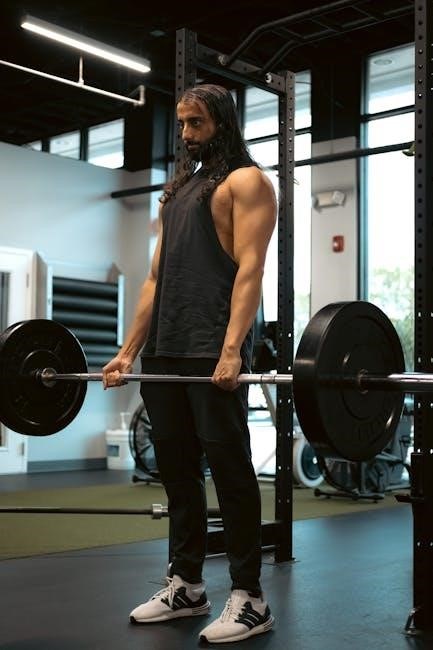
Utilizing the Huberman Fitness Tracker PDF is crucial for adhering to this cycle. The tracker facilitates logging workouts, monitoring RPE, and ensuring proper periodization. This systematic approach prevents plateaus and optimizes results, fostering a sustainable fitness routine.

Schedule A/B Periodization – A Deep Dive
Schedule A/B periodization is the cornerstone of the Huberman workout protocol, strategically varying training focus throughout the week. ‘Workout A’ prioritizes strength and muscle hypertrophy – building muscle mass – utilizing heavier weights and lower repetitions. Conversely, ‘Workout B’ emphasizes strength endurance, employing lighter weights and higher repetitions.
This alternating approach prevents the body from adapting to a single stimulus, maximizing gains and minimizing the risk of plateaus. The 7-day cycle dictates when to implement each workout, ensuring sufficient recovery between similar training sessions.

The Huberman Fitness Tracker PDF is instrumental in managing this periodization. It allows users to meticulously log each set, tracking weight, reps, and RPE, ensuring adherence to the intended stimulus for each workout. This detailed tracking is vital for optimizing long-term progress.
Workout A: Strength & Hypertrophy Focus
Workout A is designed to maximize muscular strength and promote hypertrophy – the growth of muscle tissue. This is achieved through a focus on lifting heavier weights for lower repetitions, challenging the neuromuscular system and stimulating muscle protein synthesis. It’s a crucial component of the Huberman protocol for building a robust physique.
The emphasis is on compound movements, exercises that engage multiple muscle groups simultaneously, such as squats, deadlifts, bench presses, and overhead presses. These movements are highly effective for overall strength development and hormonal response.
Proper form is paramount in Workout A to prevent injury and ensure effective muscle recruitment. Utilizing the Huberman Fitness Tracker PDF to log weight, reps, and RPE allows for precise monitoring of progress and adjustments to maintain optimal intensity.
Key Exercises in Workout A
Workout A centers around foundational compound lifts, prioritizing movements that deliver the greatest return on investment for strength and muscle growth. Core exercises include the Back Squat, essential for lower body power and overall strength. The Deadlift, a full-body exercise, builds immense strength and posterior chain development.
Bench Press targets the chest, shoulders, and triceps, while the Overhead Press focuses on shoulder strength and stability. Pull-ups (or Lat Pulldowns) are crucial for back development and upper body pulling strength. These exercises form the backbone of Workout A.
Accessory exercises, logged within the Huberman Fitness Tracker PDF, can be added to address individual weaknesses or imbalances. Examples include rows, lunges, and various isolation movements. Remember to prioritize proper form and controlled movements throughout each exercise.
Sets, Reps, and RPE Guidelines for Workout A
For Workout A, a 3-5 set structure is recommended for the primary compound lifts – Squats, Deadlifts, Bench Press, and Overhead Press. Rep ranges typically fall between 5-8 reps, focusing on building strength and hypertrophy. Utilize the Rate of Perceived Exertion (RPE) scale to gauge intensity.
Aim for an RPE of 7-9 on most working sets, meaning the set feels challenging but with 1-2 reps “left in the tank.” This ensures sufficient stimulus without excessive fatigue. For Pull-ups/Lat Pulldowns, aim for as many reps as possible (AMRAP) across 3-4 sets.
The Huberman Fitness Tracker PDF facilitates logging weight, reps, and RPE for each set, enabling progressive overload. Adjust weight based on RPE; if consistently achieving RPE 9+, increase the load. Prioritize maintaining proper form throughout each set, even as fatigue increases.
Workout B: Strength & Endurance Focus
Workout B shifts the emphasis towards strength endurance, incorporating higher rep ranges and shorter rest periods compared to Workout A. This session is designed to improve muscular endurance and metabolic conditioning, complementing the strength focus of Workout A.
Expect a blend of compound and isolation exercises, including variations of squats, lunges, push-ups, and rows. Rep ranges typically fall between 10-15 reps per set, with 3-4 sets per exercise. Rest periods should be kept relatively short – around 60-90 seconds – to maintain metabolic stress.
The Huberman protocol’s A/B split ensures balanced development. Utilizing the accompanying PDF tracker is crucial for logging performance and monitoring progress. Remember to prioritize controlled movements and maintain proper form throughout each exercise, even with increased repetitions.
Key Exercises in Workout B
Workout B centers around exercises that build both strength and endurance. Core movements include variations of squats – front squats or goblet squats are excellent choices – to maintain lower body strength with higher reps. Lunges, both forward and reverse, further challenge leg endurance and stability.
Upper body work features push-up variations (incline, decline, or standard) and rowing exercises, such as dumbbell rows or cable rows. These target back and chest muscles while promoting muscular endurance. Incorporate exercises like pull-ups (assisted if needed) to build upper body pulling strength.
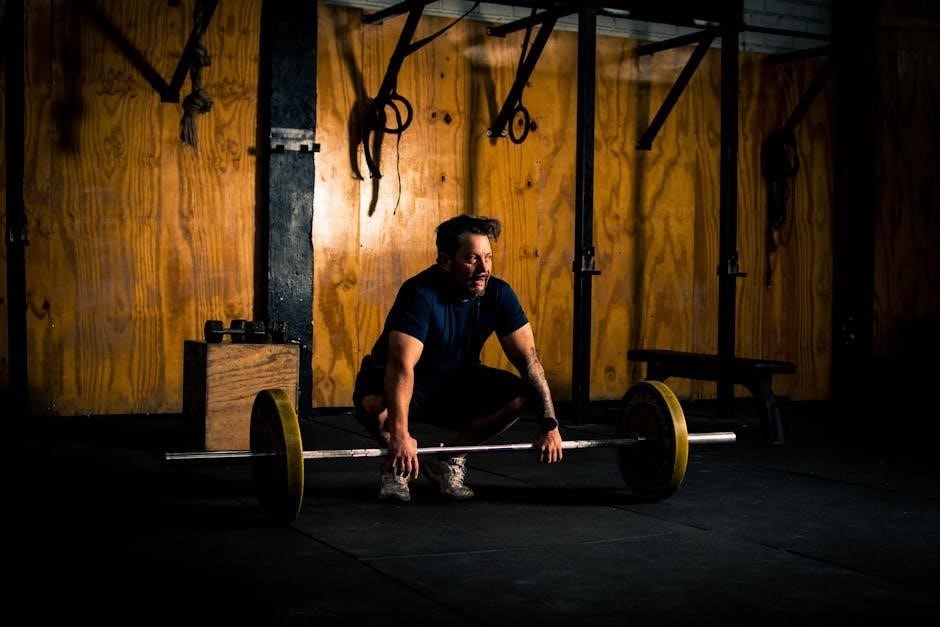
Don’t neglect core work; planks and Russian twists are effective for building stability. The Huberman protocol emphasizes full-body engagement, so select exercises that challenge multiple muscle groups simultaneously. Remember to utilize the PDF tracker to log weights and reps for each exercise.
Sets, Reps, and RPE Guidelines for Workout B
For Workout B, aim for 3-4 sets of each exercise. Rep ranges typically fall between 8-12 reps, focusing on maintaining good form throughout. Utilize a Rate of Perceived Exertion (RPE) of 7-8, meaning the set should feel challenging but not maximal. You should have 2-3 reps “in the tank.”
Prioritize controlled movements over lifting heavy weight. The Huberman protocol emphasizes time under tension, so focus on a 2-1-2 tempo – two seconds for the eccentric (lowering) phase, one second pause, and two seconds for the concentric (lifting) phase.
Rest periods should be between 60-90 seconds between sets. Track your RPE in the Huberman Fitness Tracker PDF to monitor progress and adjust weight accordingly. If RPE consistently falls below 7, increase the weight. If it exceeds 8, reduce the weight.
Importance of RPE (Rate of Perceived Exertion)
Rate of Perceived Exertion (RPE) is central to the Huberman workout protocol, offering a subjective measure of workout intensity. Unlike relying solely on weight, RPE accounts for daily fluctuations in energy levels and fatigue. It’s a scale, typically 1-10, where 1 is minimal effort and 10 is maximal.
The protocol advocates for utilizing RPE to autoregulate training. This means adjusting weight based on how you feel rather than adhering rigidly to a predetermined load. This prevents overtraining and optimizes muscle adaptation. The Huberman Fitness Tracker PDF facilitates RPE logging for each set.
Consistent RPE tracking reveals trends, indicating when to increase or decrease weight. Aim for an RPE of 7-8 for most sets, leaving 2-3 reps “in the tank.” Understanding and applying RPE is crucial for maximizing the effectiveness and sustainability of the program.
Warm-up and Cool-down Protocols
Prioritizing warm-up and cool-down routines is fundamental to the Huberman workout protocol, enhancing performance and mitigating injury risk. A dynamic warm-up prepares the nervous system and muscles for exertion, increasing blood flow and range of motion.
Recommended warm-up activities include light cardio (5-10 minutes) followed by mobility exercises targeting the joints involved in the workout. Focus on movements mimicking the exercises to be performed. Cool-downs are equally vital, facilitating gradual recovery and reducing muscle soreness.
A proper cool-down involves 5-10 minutes of low-intensity cardio and static stretching, holding each stretch for 30-60 seconds. The Huberman approach emphasizes the importance of these phases for long-term adherence and optimal physiological adaptation. Neglecting them can compromise results and increase the potential for setbacks.
The Role of Non-Exercise Activity Thermogenesis (NEAT)
Beyond structured workouts, Dr. Huberman’s protocol highlights the significant impact of Non-Exercise Activity Thermogenesis (NEAT) on overall fitness and metabolic health. NEAT encompasses all physical activity not classified as exercise – walking, taking the stairs, fidgeting, and daily chores.
Increasing NEAT contributes substantially to daily calorie expenditure, aiding in weight management and improving insulin sensitivity. Huberman advocates for consciously incorporating more movement throughout the day, rather than relying solely on gym sessions.
Simple strategies include standing desks, walking meetings, and prioritizing active transportation. Maximizing NEAT complements the strength and endurance training, creating a synergistic effect for enhanced results. It’s a crucial component for those aiming for sustainable fitness improvements and a healthier lifestyle.
Supplementation Considerations (Disclaimer: Consult a Healthcare Professional)
Dr. Huberman emphasizes that supplementation should always be considered secondary to foundational principles like sleep, nutrition, and consistent training. He stresses the importance of consulting a qualified healthcare professional before introducing any new supplements into your regimen.
While not central to the protocol, certain supplements may offer marginal benefits for specific individuals. Creatine monohydrate is often discussed for its potential to enhance strength and muscle mass, while vitamin D3 may be beneficial for those with deficiencies.
However, individual needs vary greatly, and self-experimentation can be risky. Prioritize a whole-food diet and address any underlying deficiencies before considering supplementation. Remember, supplements are intended to supplement a healthy lifestyle, not replace it.
Tracking Progress: Utilizing the Huberman Fitness Tracker PDF
A key component of the Huberman Foundational Fitness Protocol is diligent tracking, facilitated by a freely available PDF fitness tracker. This tool is designed to monitor your adherence to the 7-day training cycle and Schedule A/B periodization, ensuring consistent progress.
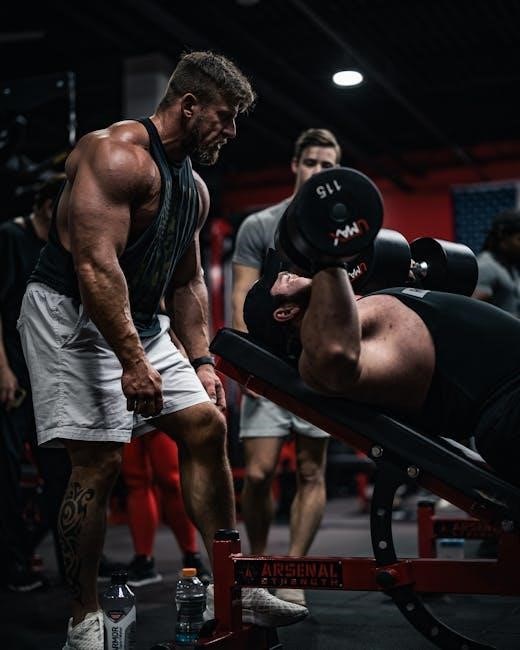
The tracker allows for detailed per-set logging, including recording the weight lifted, repetitions completed, and your Rate of Perceived Exertion (RPE) for each exercise. This granular data provides valuable insights into your performance and allows for informed adjustments to your training plan.

Regularly reviewing your logged data helps identify plateaus, track strength gains, and optimize your workout intensity. Consistent tracking isn’t merely about numbers; it fosters a deeper connection to your body and promotes long-term adherence to the protocol.
Adapting the Protocol to Individual Needs & Fitness Levels
The Huberman Foundational Fitness Protocol isn’t a rigid prescription, but rather a framework adaptable to diverse fitness levels and individual needs. Beginners should prioritize mastering proper form before increasing weight or intensity, potentially starting with fewer sets or modified exercises.
Individuals with prior training experience can progressively overload by increasing weight, reps, or RPE, while experienced lifters may explore advanced techniques like drop sets or supersets. Listen to your body and adjust the protocol based on your recovery capacity and any existing physical limitations.
Consider factors like age, injury history, and lifestyle when tailoring the program. Modifying exercise selection to accommodate joint pain or mobility restrictions is crucial. Remember, consistency and sustainable progress are paramount, making personalization key to long-term success.
Common Mistakes to Avoid
Implementing the Huberman protocol requires mindful execution to maximize benefits and minimize risk. A frequent error is neglecting proper warm-up and cool-down routines, increasing injury susceptibility. Another pitfall is ego lifting – prioritizing weight over form, compromising technique and potentially causing harm.
Ignoring RPE guidelines is also detrimental; pushing too hard on every set hinders recovery and can lead to overtraining. Failing to track progress accurately limits the ability to identify plateaus and adjust the program effectively. Inconsistent adherence to the 7-day cycle disrupts periodization and diminishes results.
Finally, overlooking the importance of NEAT (Non-Exercise Activity Thermogenesis) underestimates its contribution to overall fitness. Prioritize consistent effort, proper form, and attentive self-assessment for optimal outcomes with this protocol.
Resources & Further Learning
To deepen your understanding of the Huberman Foundational Fitness Protocol, several resources are readily available. Dr. Huberman’s official website and YouTube channel host extensive discussions on exercise science, recovery, and supplementation. The free Huberman Fitness Tracker PDF itself is a crucial tool for implementation and progress monitoring.
Explore podcasts featuring Dr. Huberman discussing the protocol’s rationale and nuances. Consider researching articles on periodization, RPE scales, and NEAT to enhance your knowledge base. Connect with online communities dedicated to the protocol for shared experiences and support.

Remember to critically evaluate information and consult with qualified healthcare professionals before making significant changes to your fitness regimen. Continuous learning and adaptation are key to long-term success.